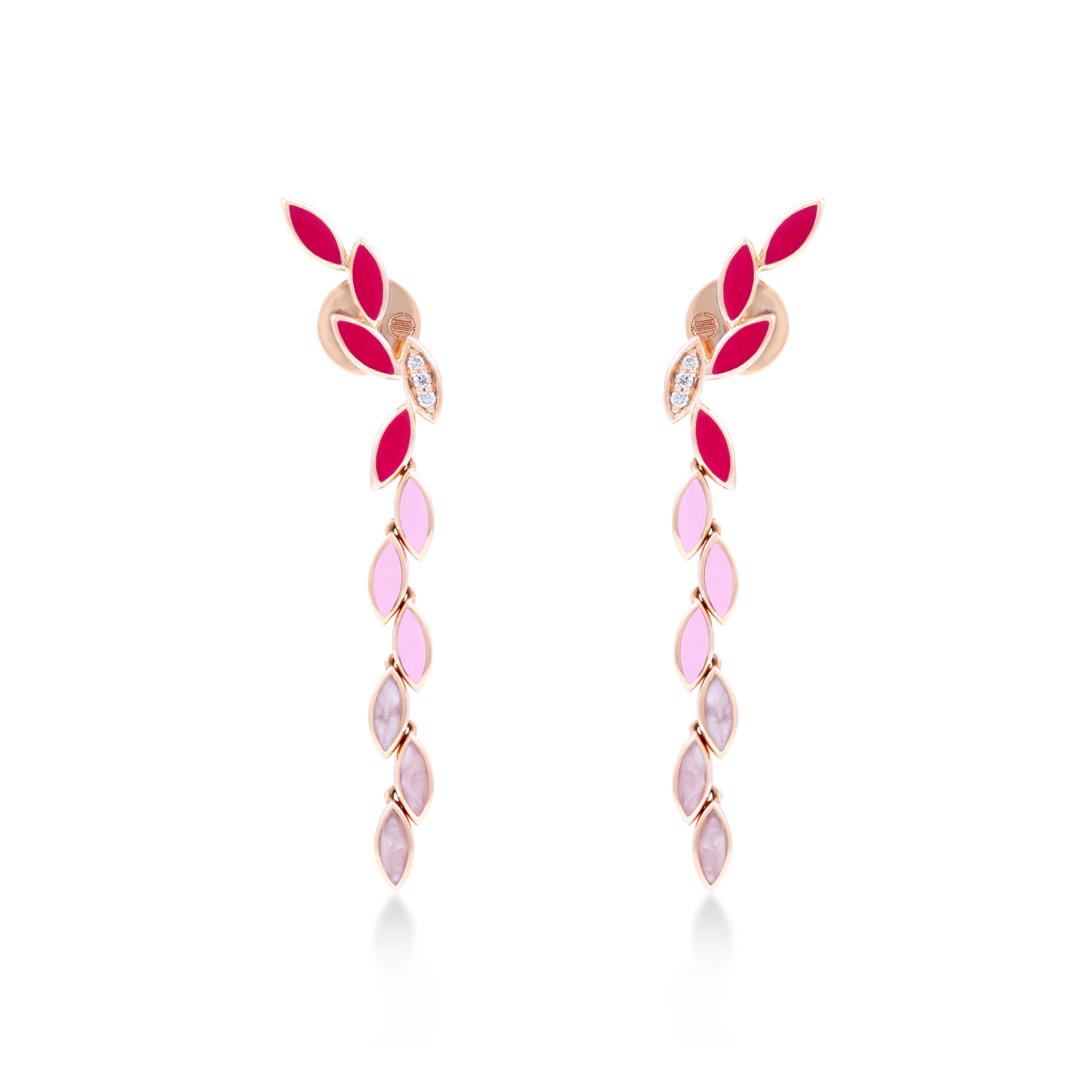
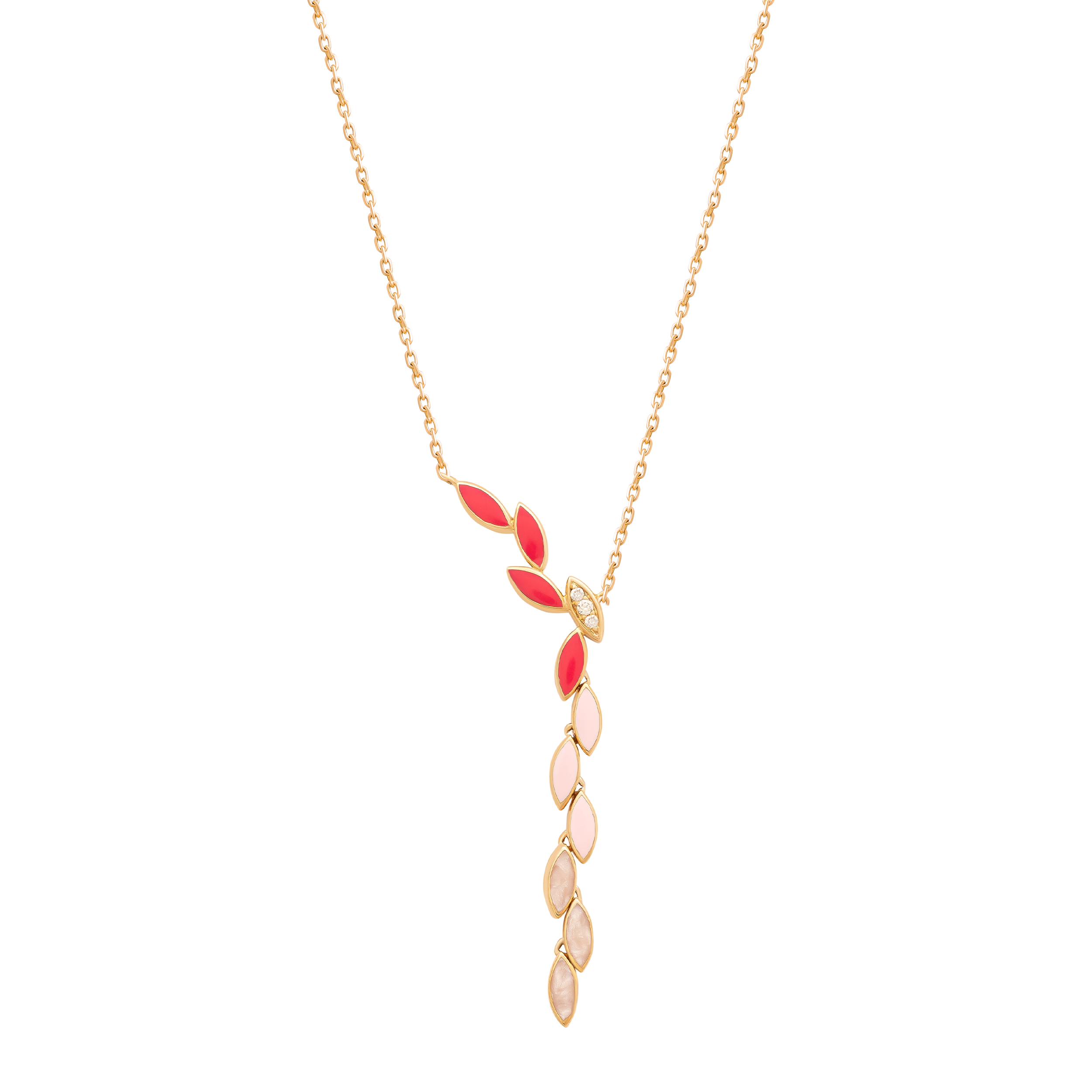
Diamonds get most of the credit for sparkle. Shape is what actually decides how a piece looks once it's on your hand or around your neck, and it's the part people think about least. Two stones with near-identical clarity and the exact same carat weight can look completely different once you factor in outline and cut, which still catches people off guard when they see it happen up close.
Some diamond shapes feel clean and modern. Others bring softness, or romance, or a vintage feel that's hard to fake with a modern cut. Shape also changes how large a diamond looks, how it sits next to other stones, and whether it fits a ring better than it fits a pair of earrings. Put two similar-looking stones side by side and one will just look bigger, no obvious reason why until you check the shape.
Buying fine jewellery in 2026, it helps to know this before you shop, not after you've bought something trendy and realised a year later it was never really you.

Why Diamond Shape Matters in Jewellery Design
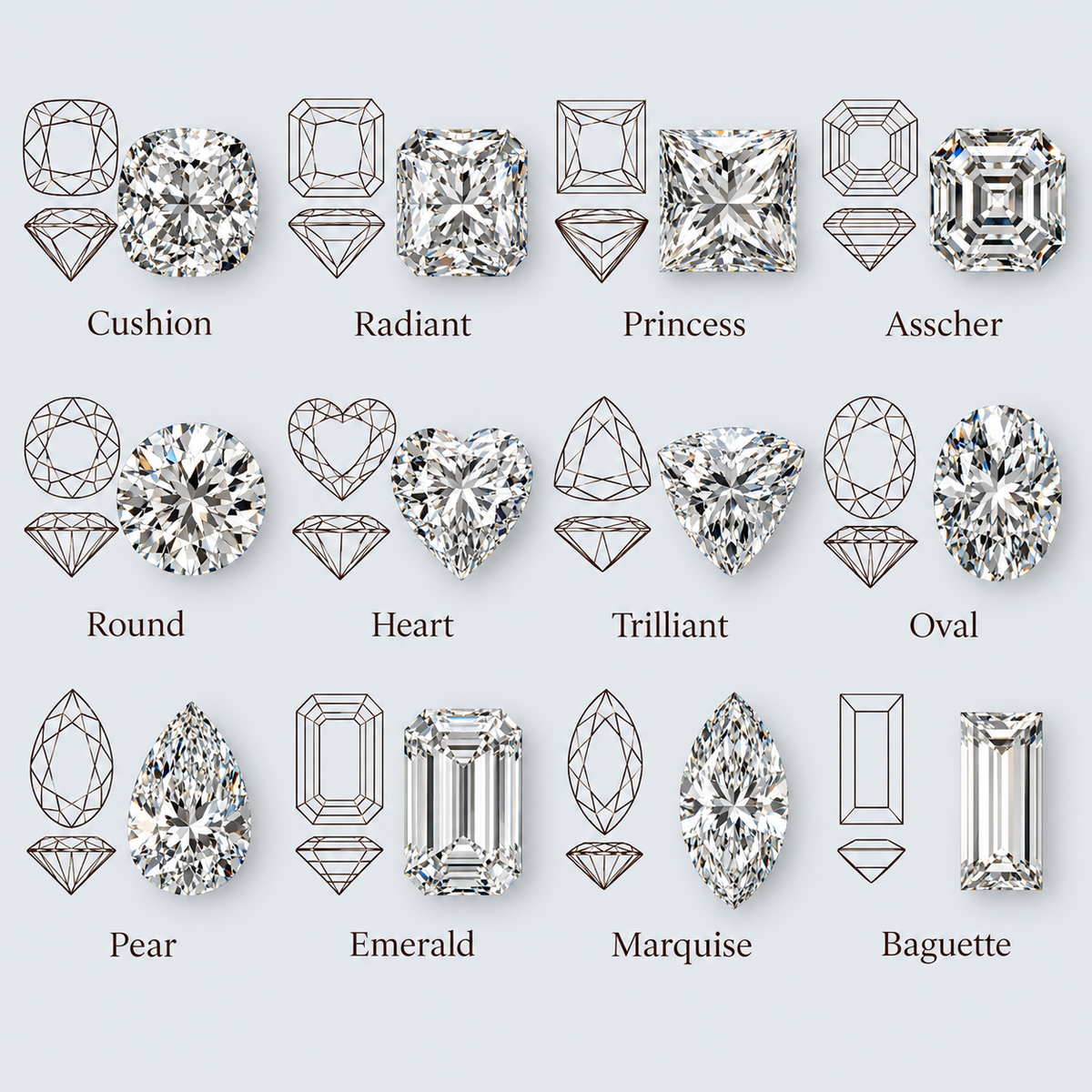
People throw around "diamond shape" and "diamond cut" like they mean the same thing. They don't, not exactly. Shape is the outline: round, oval, pear, heart, emerald. The cut is about how the facets are arranged to handle light. The outline is what gives a piece most of its personality.
Round comes across as balanced. An elongated stone can make a hand look longer. Some people say slimmer too, though that's more a matter of opinion. Angular shapes add structure. Curves soften things.
The setting decides just as much as the stone, though. Gold colour, accent stones, overall proportions, all of it can make the same diamond shape feel quiet in one design and loud in another.
1. Round Diamonds: Classic and Balanced
The round brilliant is probably what most people picture the second you say "diamond." It's symmetrical, which is really just another word for flexible. It works in a plain stud and it works in a heavily detailed ring, without needing much adjustment either way.
Because the outline is so even, round stones combine easily with other stones without the whole thing starting to look busy. If you want one piece that moves between an ordinary Tuesday and a wedding, round is usually it. Not exciting, maybe, but it holds up.
2. Oval Diamonds: Elegant With an Elongated Look
Ovals take the curved edges of a round stone and stretch them out, which gives them a softer look than you'd expect given how much visual presence they actually have.
In a ring, that elongation can make a finger look longer. In earrings or a pendant, it just gives the eye a line to follow down. People who like round diamond shapes but want something slightly less obvious usually end up here.
3. Emerald Shapes: Clean, Structured and Sophisticated
Emerald-cut diamonds are rectangular, with the corners cropped off and a step-cut facet pattern instead of the usual brilliant cut. You don't get the same scattered sparkle a round stone throws off, you get broader, slower flashes instead, and for some people that's the whole appeal, it feels less flashy and more considered.
Streamlined, Art Deco style settings suit it best, since the shape is basically built around long straight lines. Jewel Teller's Art Deco Collection runs with exactly this, geometric lines through rings, earrings, bracelets, and pendants in 18K white and yellow gold with diamonds set throughout.
If defined lines appeal to you more than sparkle for its own sake, this is worth a longer look.
4. Pear-Shaped Diamonds: Softness With a Point of Difference
A pear diamond has a rounded end and a point. Not really curved, not really angular, somewhere in between, and that's basically the whole draw.
Orientation changes the effect completely. Point down in a pendant, it stretches the design out. Arranged around a centre stone, several pear-cut diamonds grouped together start to look almost like petals.
Major Jewellery designers in Dubai reach for pear stones when they want a piece to have some movement, rather than sitting there in strict symmetry.
5. Heart-Shaped Designs: Jewellery With Meaning
There's no getting around what a heart-shaped diamond signals. It reads as sentimental immediately, no explanation needed, which makes it an odd fit for jewellery bought just because it looks nice. It suits something meant to mark an actual relationship or milestone better.
Jewel Teller's Baby Love Collection runs with that idea: fine-chain bracelets, necklaces, pendants, and heart-shaped earrings in 18K gold, several sets with diamonds. The shape isn't just decoration here, it's carrying some of the sentiment for you.
6. Geometric Shapes Create a Stronger Statement
Square and rectangular stones give a piece definition almost automatically. Even a fairly plain design starts to look deliberate the moment the lines go straight instead of curved.
This pairs well with anything that takes cues from architecture or repeating patterns. Polished gold against hard lines and brilliant stones comes across sharper and more current than curved shapes tend to.
You can see the idea across a few different lines. Jewel Teller's Calatrava and Quatrefoil Collections, plus the Art Deco range, are all built on structure over ornament.
Smaller Diamonds Can Shape the Entire Design
You don't need one big centre stone to make a piece feel substantial. Sometimes it's the opposite, a scattering of small diamonds along a curve, around a motif, or across a cuff does more for a piece's shape than a single large stone ever could. It's easiest to see this across a whole collection, one piece on its own won't really show it.
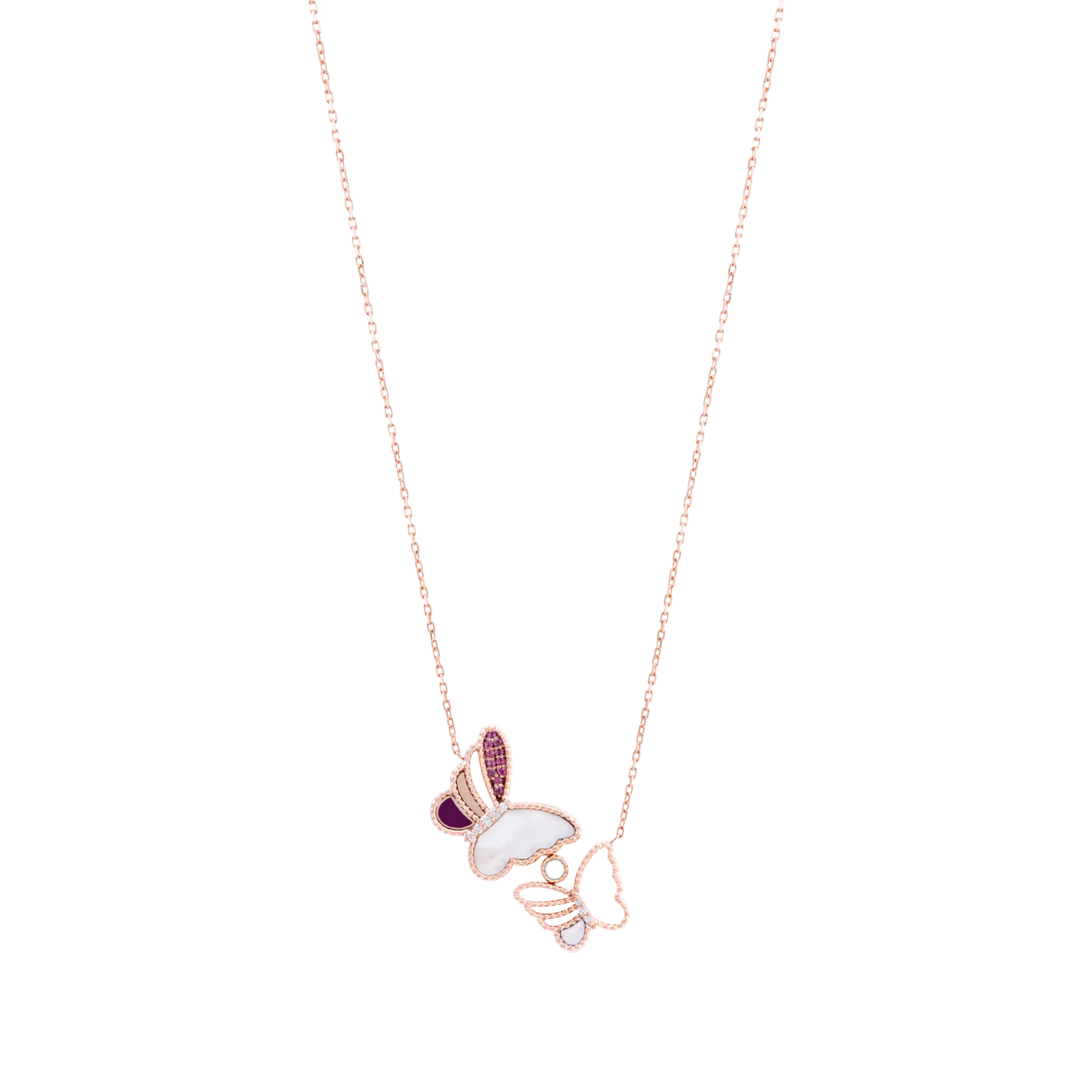
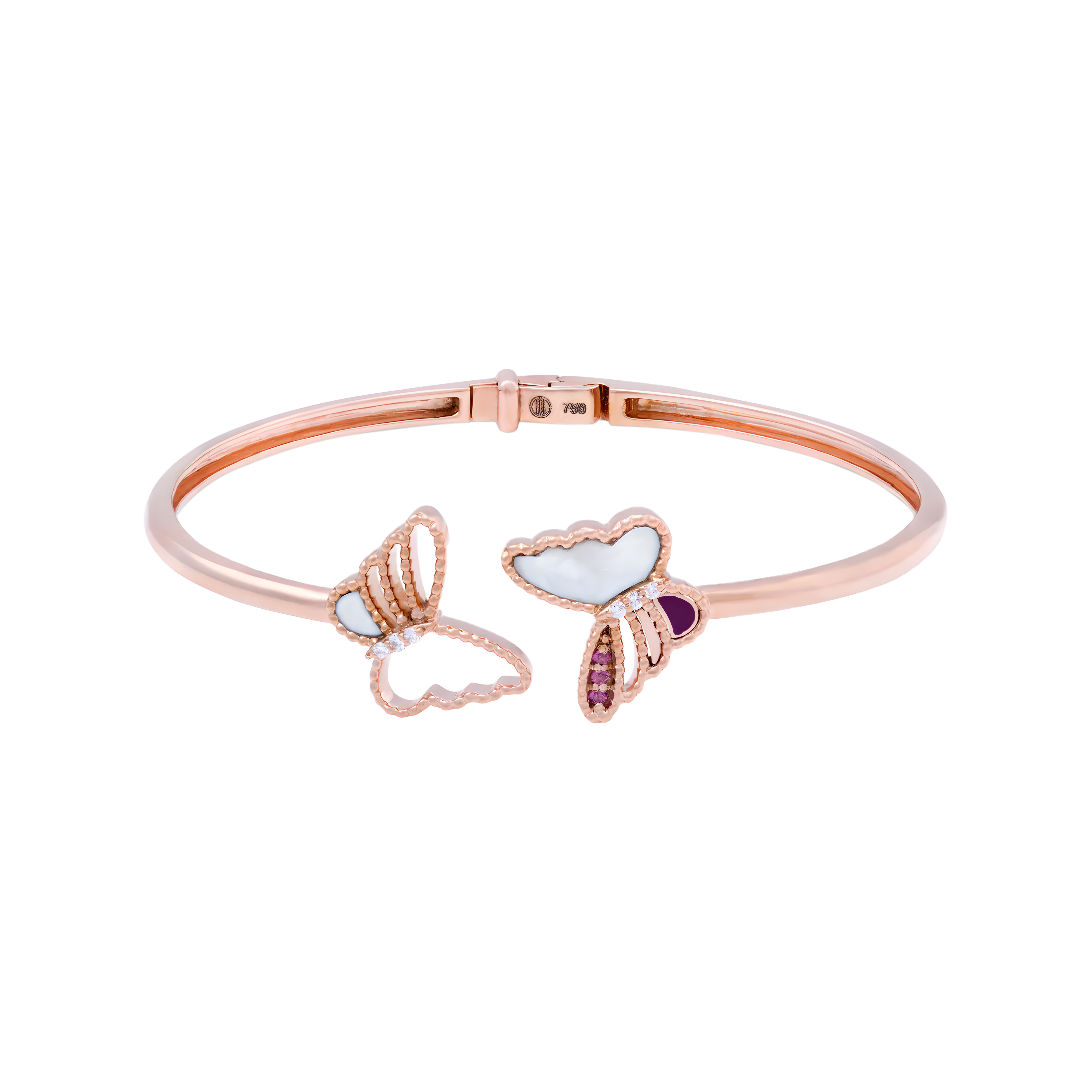
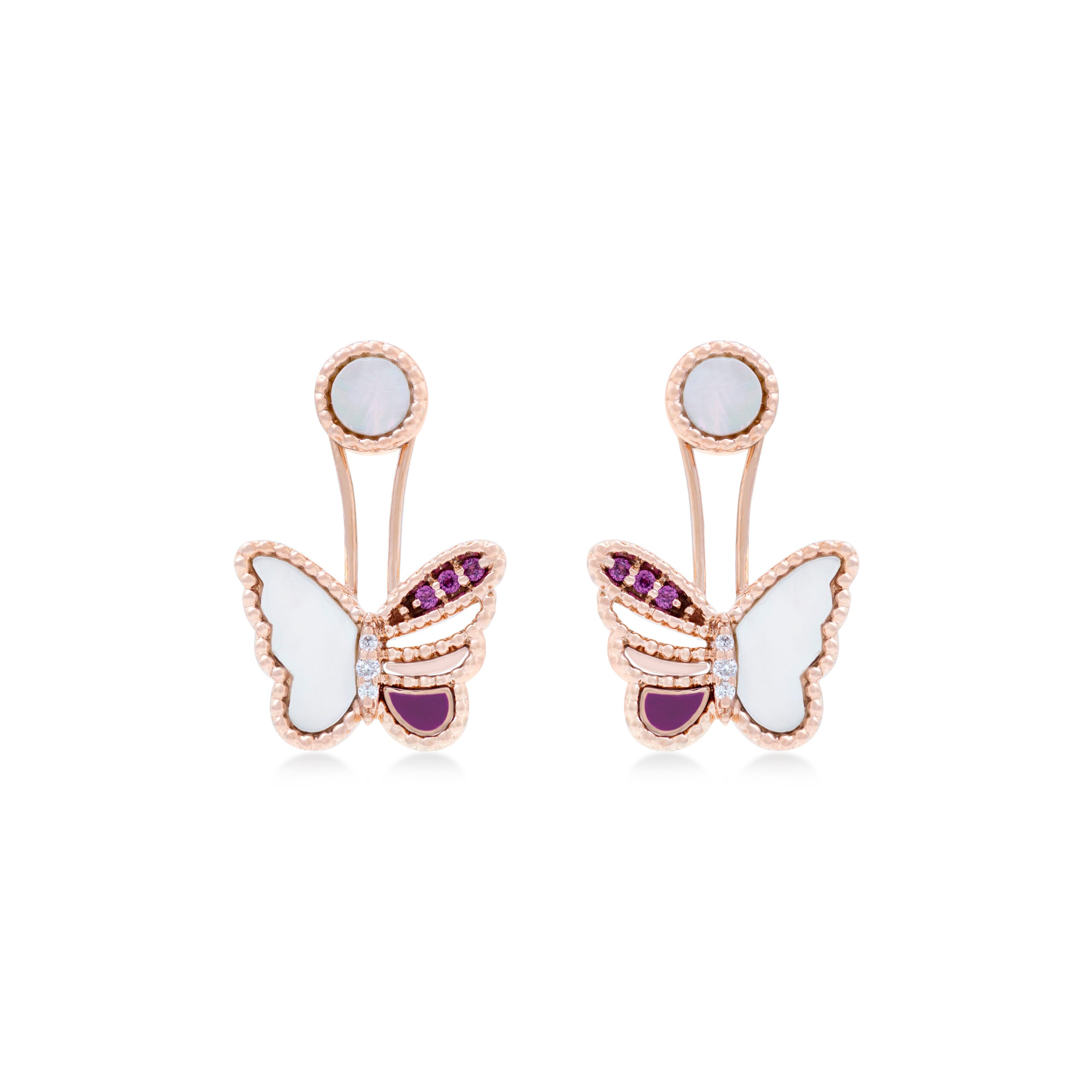
Jewel Teller's Blossom Collection uses small-diamond placement to build floral patterns, and Branch Affinity does something similar with organic, branch-like forms. A few other lines on the site, Arcobaleno, Bamboo, Butter Fly, City Lights, Pearl, mix diamonds with colour and different metals and end up looking almost nothing alike despite using a lot of the same underlying technique.
Choosing a Diamond Shape for Your Personal Style
Nobody's shape is the "right" one. It's more useful to just think honestly about what you already reach for in your closet.
A simple wardrobe, round or oval probably fits without much thought. Like sharper, statement-y accessories, geometric or emerald will likely suit you better. Buying something sentimental, heart motifs and other symbolic shapes tend to mean more than picking purely for looks.
Where the piece sits on your body matters too, and this part gets skipped a lot. Earrings sit next to your face. Rings interact with the actual shape of your hand. Pendants need to land right in the neckline, not just look good on a stand. Something that photographs beautifully in a product shot won't necessarily look right once it's actually on you. Choosing the best jewellery store in Dubai ensures you make the right choice regarding luxury wearables made from precious metal and stone.
Fine jewellery tends to stick around for years. It's worth choosing based on proportion and craftsmanship, not on whatever's trending right now.
Conclusion
Diamond Shape changes a piece's whole personality more than people expect going in. Round brings symmetry. Elongated cuts add elegance. Geometric shapes bring structure. Symbolic shapes bring in something a plain brilliant cut just can't, meaning.
The right choice comes down to how the shape works with the setting, the metal, the proportions, and mostly the person actually wearing it, not whatever's popular this particular year.
FAQs
1. Which diamond shape gives jewellery the most classic appearance?
Round, most people would say. It's symmetrical and works across rings, earrings, necklaces, and bracelets without much fuss. Though the final look still comes down to the setting as much as the stone itself.
2. Do different diamond shapes look different even at the same carat weight?
Yes, and this trips people up constantly. Carat is weight, not size. Two stones at the exact same carat weight can look different sizes depending on their proportions and how that weight is spread out across the stone
3. How should I choose between different diamond shapes?
Start with your own style, not a trend list. Round and oval are the most versatile for everyday wear. Rectangular and geometric shapes feel more structured. And if a piece is meant to carry meaning, a symbolic shape like a heart usually beats something chosen purely for looks.