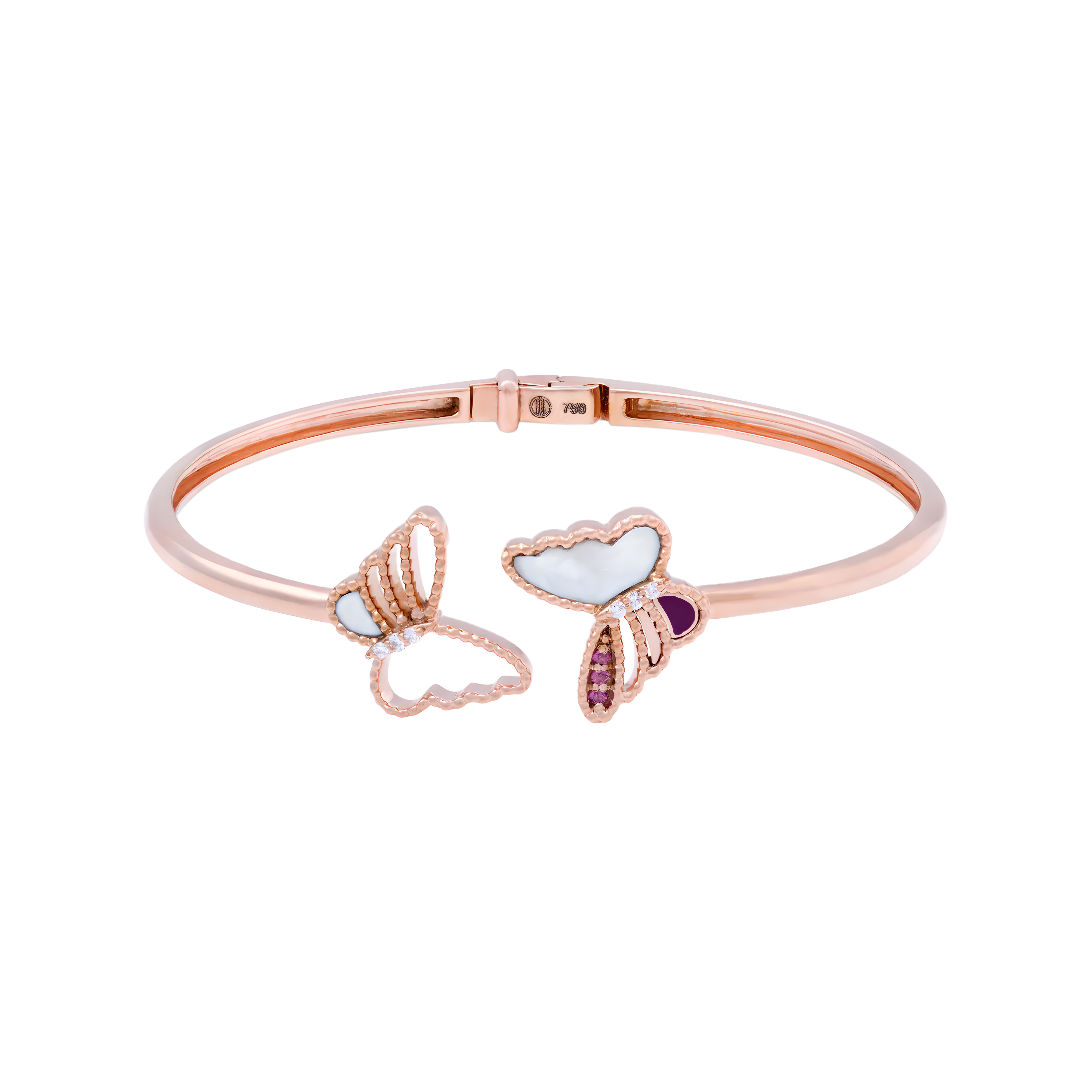
The most common error when purchasing bracelets is getting the fit right. If it is too loose, it will come and go all day. If it is too tight, you will not get to use it extended beyond the first week. The wrist measurement step is such an important part of the bespoke knot gold bracelet process, hence the number of reasons. It's not an optional added value at the bottom of the “check out” page. It's the step that will determine if the piece looks like it was created for you, or is just a generic buy.
Counting on another level is a hand knot design. Jewel Teller as the best Jewellery designer in Dubai has big plans for this as well. The knot is used, rather than a plain bangle or chain, to heighten the piece on the wrist and to alter the way the piece hangs. The slightest bit off target and the knot comes down in your wrist instead of on top; that looks wonky, doesn't it? Before anything starts to get formed into gold, Jewel Teller, begins at the wrist.

Why Wrist Measurement Comes First
Gold will not stretch. After a bracelet is cast and the knot is formed, you cannot stretch or shrink it, unlike a fabric strap. If a correction is made after the cast, it is generally necessary to cut the component open and it will reduce the strength of the metal and will often result in the metal having exposed seams later. Hence, the measurement must be correct on the first attempt.
There's also the whole "how a knot bracelet works or looks in comparison with others”. Then there's the "how does a knot bracelet fit or look when compared to the others”. A cuff can be adjusted by bending. The links of a chain bracelet are numbered that can be added or removed. A knot design, on the other hand, is typically a set, sculptural design, which should be positioned at a certain spot on the wrist in order to appear non-accidental and planned.
How Jewel Teller Measures Your Wrist
The process is simple on the surface but the details matter.
-
Soft measuring tape around the wrist bone. The tape sits just below the wrist bone, where most bracelets naturally rest. This is measured snug but not tight, the same way you would check if a bracelet already fits.
-
Adding ease for the knot's depth. Because the knot has volume, a small allowance is added to the base measurement so the bracelet does not feel constrictive when the knot rotates to the top of the wrist.
-
Checking both wrists. Wrists are rarely identical. Jewel Teller records both, particularly if the bracelet is meant to sit on the dominant hand, which tends to be very slightly larger due to muscle and bone development.
-
Accounting for the clasp type. A hidden clasp or an extension chain changes how much slack the design needs. This gets factored in during the same sitting, not as an afterthought.
-
String or paper method for those without a tape. For customers ordering remotely, Jewel Teller provides a simple guide using a strip of paper or string, then measuring that length against a ruler. It is not as precise as a proper tape, but with the added ease built into the sizing chart, it works well enough for most orders.
None of this takes long. A wrist measurement session usually takes under ten minutes in person. What takes longer is translating that number into the actual gold band length, because the knot itself consumes some of the material that would otherwise sit flat around the wrist.
Why the Knot Changes the Math
Here is something people do not usually think about until it is explained to them. A plain bangle of, say, 6.5 inches uses that entire 6.5 inches as circumference. The case is different for bracelets from the Knot Collection from The Jewel Teller. Part of the gold gets folded and shaped into the knot itself, so the effective open length of the band is shorter than the total metal used.
Jewel Teller's goldsmiths calculate this separately for every knot style, since a tighter, more compact knot uses less material for the knot itself and leaves more length for the band, while a looser, more decorative knot pulls more gold away from the circumference. This is one of the reasons a knot bracelet cannot simply be resized using a generic bangle size chart. The knot has to be accounted for on its own.
What Happens After Measurement
Once the wrist size and knot style are confirmed, Jewel Teller moves into the shaping stage. The gold is worked into the knot form first, since this is the part that requires the most hand skill, and the band length is adjusted around it afterward. This order matters. If the band were finalized first, the knot would have to be forced into a fixed space, which often distorts its shape or leaves the proportions looking off.
As the best jewellery manufacturer in Dubai, our artisans ensure a final fitting check happens before every piece ships. This is less about remeasuring and more about confirming the knot sits where it should, roughly at the top or slightly to the side of the wrist depending on the customer's preference, and that the clasp closes without strain.
A Few Things to Keep in Mind Before Ordering
A couple of habits help make the ordering process smoother for you too if you are ready to order. Use the wrist measurement at the end of the day - wrists may become slightly swollen with heat and activity. Don't measure immediately following exercise, either. And when being between sizes, it is always advantageous to go up in the size of the knot, as a knot is a thicker design, and will already feel snugger than a simple piece of the same length.
FAQs
1. Can a bespoke knot gold bracelet be resized after it is made?
Minor adjustments are sometimes possible, but because the knot uses gold that would otherwise be part of the band, resizing is limited compared to simpler bracelet styles. It is best to get the wrist measurement right before production begins.
2. How much ease does Jewel Teller add for the knot's volume?
This varies by knot style, but it is typically a small addition, enough to keep the bracelet comfortable once the knot sits on top of the wrist rather than lying flat.
3. What if I do not have access to a proper measuring tape?
Jewel Teller's string or paper method works as a reliable substitute. Wrap a strip of paper or string around your wrist, mark where it overlaps, then measure that length against a ruler.