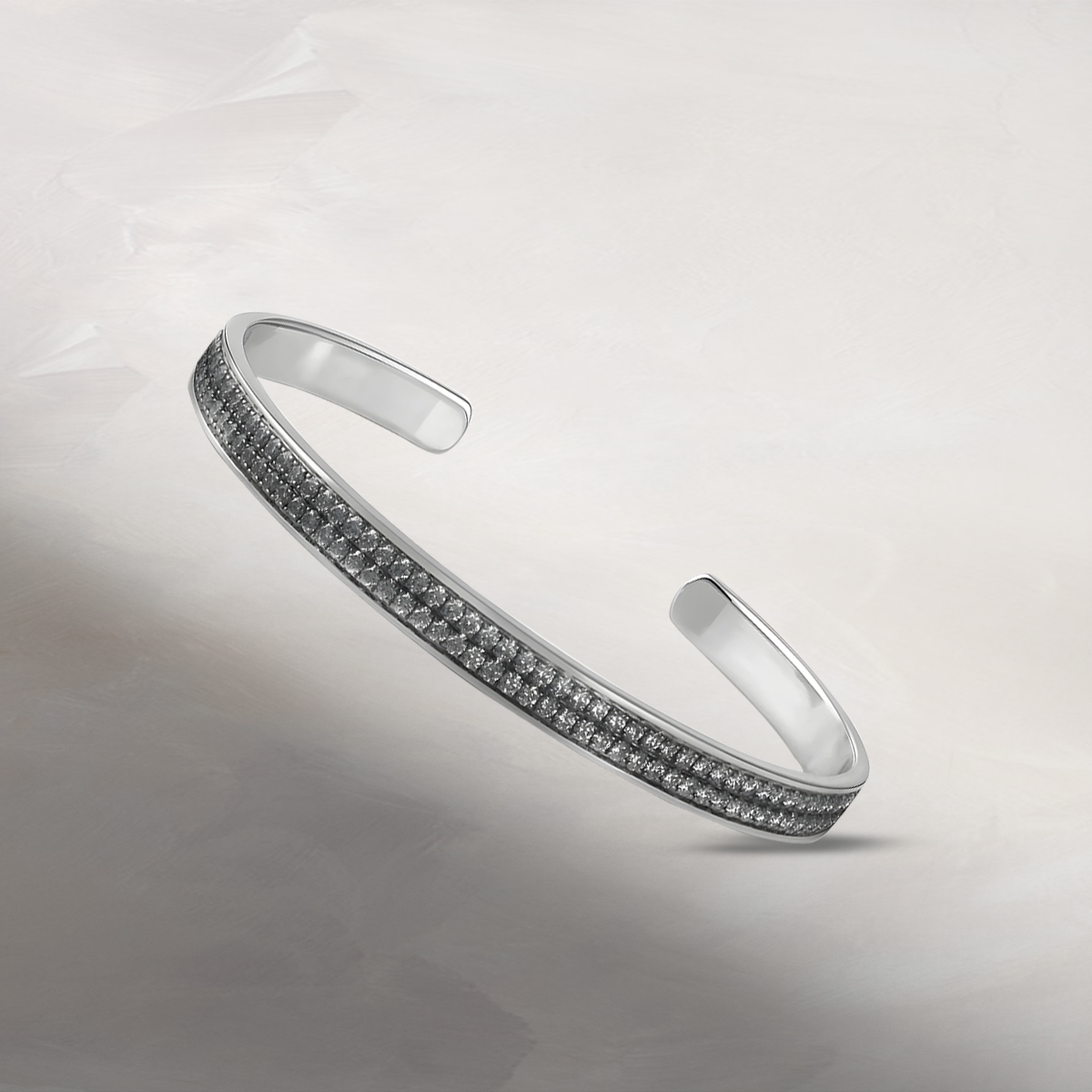
A white gold bracelet for men may look simple on the surface, but the process behind it is anything but basic. Each piece goes through a detailed journey that blends modern technology with traditional craftsmanship. At The Jewel Teller, every bracelet is treated as a precision project, not just an accessory.
This article walks you through how a white gold bracelet for men is crafted, step by step, from the first digital sketch to the final polish.

White Gold: The Foundation
Before the process begins, it helps to understand what white gold actually is. Pure gold is naturally yellow and quite soft, so it is mixed with white metals like palladium, nickel, or silver. This alloy gives the metal its strength and a silvery-white appearance.
Most white gold used in jewelry is coated with rhodium, a rare metal that adds brightness and scratch resistance. This final layer plays a big role in the bracelet’s finish, but the real work begins much earlier.
Step 1: Concept and Design
Every bracelet starts with an idea. Designers at The Jewel Teller begin by considering style, comfort, and wearability. A men’s bracelet needs to strike the right balance. It should feel solid but not bulky, stylish but not overdone.
Design inspiration can come from many places. Some bracelets follow clean, minimal lines. Others feature bold links or textured surfaces. The goal is to create something that fits modern tastes while remaining timeless.
Once the concept is clear, it moves into the digital stage.
Step 2: 3D CAD Modeling
CAD stands for Computer-Aided Design. This is where the bracelet takes its first real shape.
Using specialized software, designers build a precise 3D model of the white gold bracelet for men. Every detail is mapped out, including:
-
Link dimensions
-
Clasp mechanism
-
Thickness and weight
-
Surface patterns
This stage allows for complete accuracy. Designers can rotate the model, test proportions, and make changes before anything is physically created.
It also ensures that the bracelet will be comfortable on the wrist. Small adjustments here can prevent issues later, such as stiffness or poor fit.
Step 3: 3D Printing or Wax Modeling
Once the CAD design is finalized, it is turned into a physical prototype.
There are two common methods:
-
3D Printing: A high-resolution printer creates a resin version of the bracelet.
-
Wax Carving: A wax model is either printed or hand-carved based on the CAD file.
This prototype is an exact replica of the final piece. It allows craftsmen to inspect the design in real life. They can check details that might not be obvious on a screen.
If something feels off, adjustments are made before moving forward.
Step 4: Casting the White Gold
The next step is casting, where the bracelet begins to take its true form.
The wax or resin model is placed inside a mold and covered with a special plaster-like material. Once hardened, the mold is heated, causing the wax to melt away. This leaves behind a hollow cavity in the shape of the bracelet.
Molten white gold is then poured into this cavity.
After cooling, the mold is broken open to reveal a rough metal version of the bracelet. At this stage, it still looks unfinished. The surface is dull, and small imperfections may be present.
Step 5: Cleaning and Pre-Finishing
The raw casting is cleaned to remove any leftover material from the mold. Excess metal, known as sprues, is cut away.
Next comes pre-finishing. Craftsmen begin refining the shape by:
-
Filing rough edges
-
Smoothing surfaces
-
Adjusting link movement
This step requires a steady hand and attention to detail. Each link must move smoothly without gaps or stiffness.
At The Jewel Teller, this stage is handled by experienced artisans who understand how small adjustments affect the final feel of the bracelet.
Step 6: Assembly and Soldering
If the bracelet consists of multiple components, they are assembled at this stage.
Links are connected, clasps are attached, and joints are soldered. Soldering involves using heat to fuse metal parts together without compromising strength.
This step is critical. A poorly assembled bracelet can weaken over time. Proper alignment ensures durability and comfort.
Each connection is checked to make sure it is secure and consistent with the overall design.
Step 7: Detailed Polishing
Now the bracelet begins to show its true character.
Polishing is done in several stages, using different tools and compounds. The goal is to create a smooth, reflective surface without losing fine details.
Some areas may be polished to a high shine, while others are given a matte or brushed finish for contrast.
This combination of textures adds depth and style to the white gold bracelet for men.
Polishing is not rushed. It requires patience to achieve an even finish across every link and curve.
Step 8: Rhodium Plating
After polishing, the bracelet is coated with rhodium.
This step enhances the white color and gives the piece a bright, mirror-like finish. It also adds a protective layer that helps resist scratches and tarnish.
The bracelet is dipped into a rhodium solution and exposed to an electric current. This bonds the rhodium to the surface of the white gold.
The result is the clean, crisp look that most people associate with white gold jewelry.
Step 9: Quality Inspection
Before the bracelet is ready, it goes through a final inspection.
At The Jewel Teller, each piece is carefully checked for:
-
Surface imperfections
-
Structural integrity
-
Clasp functionality
-
Comfort and fit
Even small flaws are corrected at this stage. The goal is to deliver a bracelet that meets both visual and functional standards.
Step 10: Final Touches and Packaging
Once approved, the bracelet receives its final touches. It is cleaned, polished again if needed, and prepared for presentation.
Packaging is done with care, ensuring the bracelet arrives in perfect condition. For many customers, this is not just a purchase but a meaningful piece they will wear for years.
Why This Process Matters
Understanding how a white gold bracelet for men is crafted changes how you see the finished piece.
It is not just metal shaped into a design. It is the result of:
At The Jewel Teller, this process is taken seriously. Each bracelet reflects the time and expertise invested in its creation.
Choosing the Right White Gold Bracelet for Men
When selecting a bracelet, consider more than just appearance.
Look for:
A well-crafted bracelet should feel as good as it looks. It should sit comfortably on your wrist and move naturally with you.
Conclusion
A white gold bracelet for men is more than a style choice. It is the result of a detailed and thoughtful process that blends technology with craftsmanship. From 3D CAD design to final polish, every step plays a role in creating a piece that lasts. At The Jewel Teller, that process is what defines the quality behind every bracelet.
FAQs
1. How long does it take to craft a white gold bracelet for men?
The full process can take several days to a few weeks, depending on the complexity of the design. Custom pieces usually take longer because of additional design and approval stages.
2. Does white gold require maintenance?
Yes, white gold may need occasional re-plating with rhodium over time. This helps maintain its bright white finish. Regular cleaning and proper storage also help preserve its appearance.
3. Is a white gold bracelet durable for daily wear?
White gold is strong enough for everyday use, especially when properly crafted. However, like any fine jewelry, it should be handled with care to avoid scratches or damage.